Every practice that rents imaging equipment eventually hits the same moment: someone in finance asks what the C-arm line is going to run next year, and the honest first answer is “it depends.” It depends on how many case days you book, how long the machine stays in the room, and whether you need a technologist with it. None of that is unknowable, though, and a C-arm rental budget comes together fast once you stop guessing at a monthly figure and start building it up from how the equipment actually gets used.
Here is how we would build it, drawn from 15+ years of renting C-arms to surgery centers, pain management practices, and office-based procedure rooms across Florida.
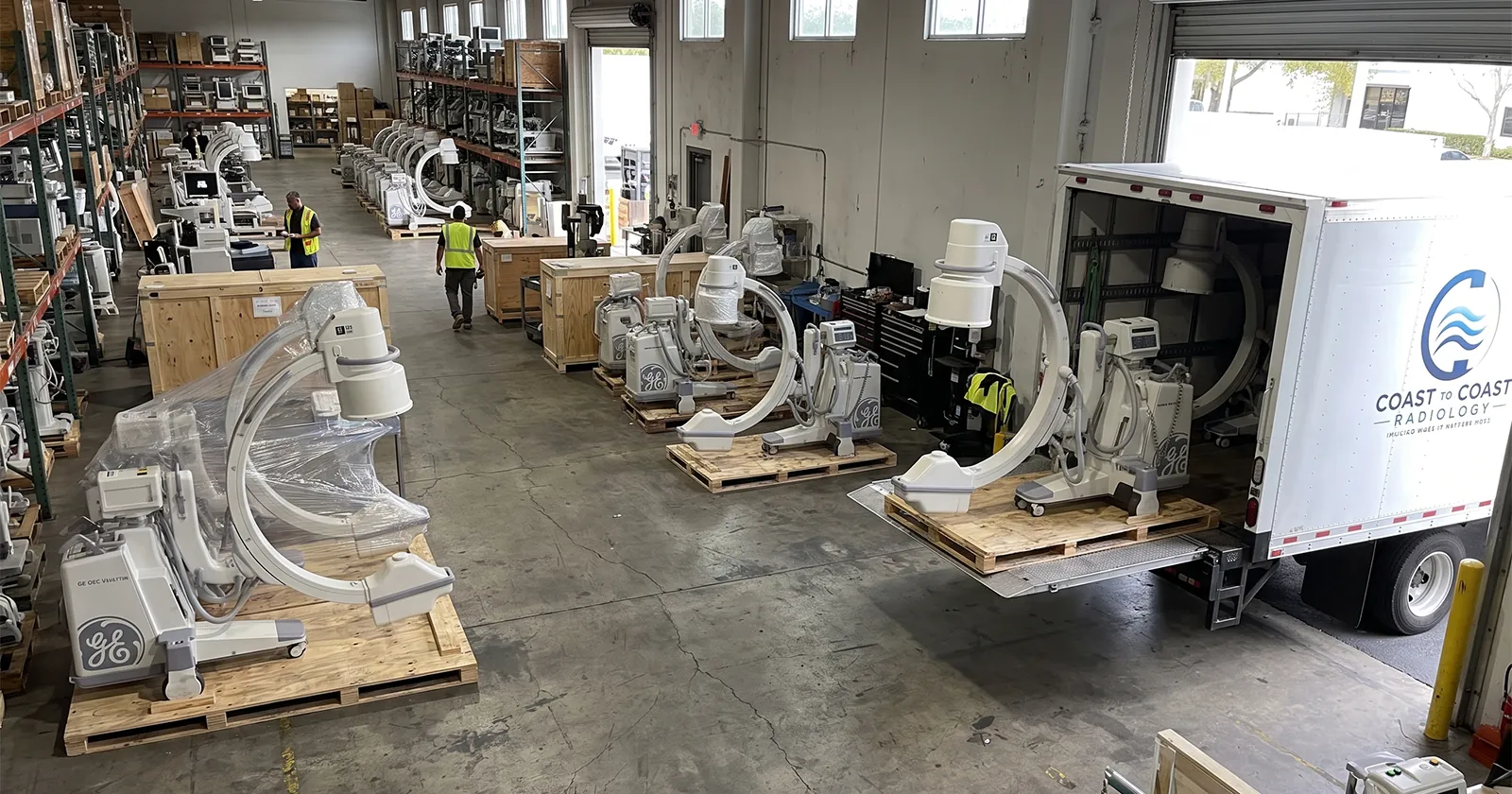
- Fleet of 20 Machines + 11 Trucks, Statewide
- Same-Day Delivery Across Florida
- 24/7 Direct Access to Travis & Sean
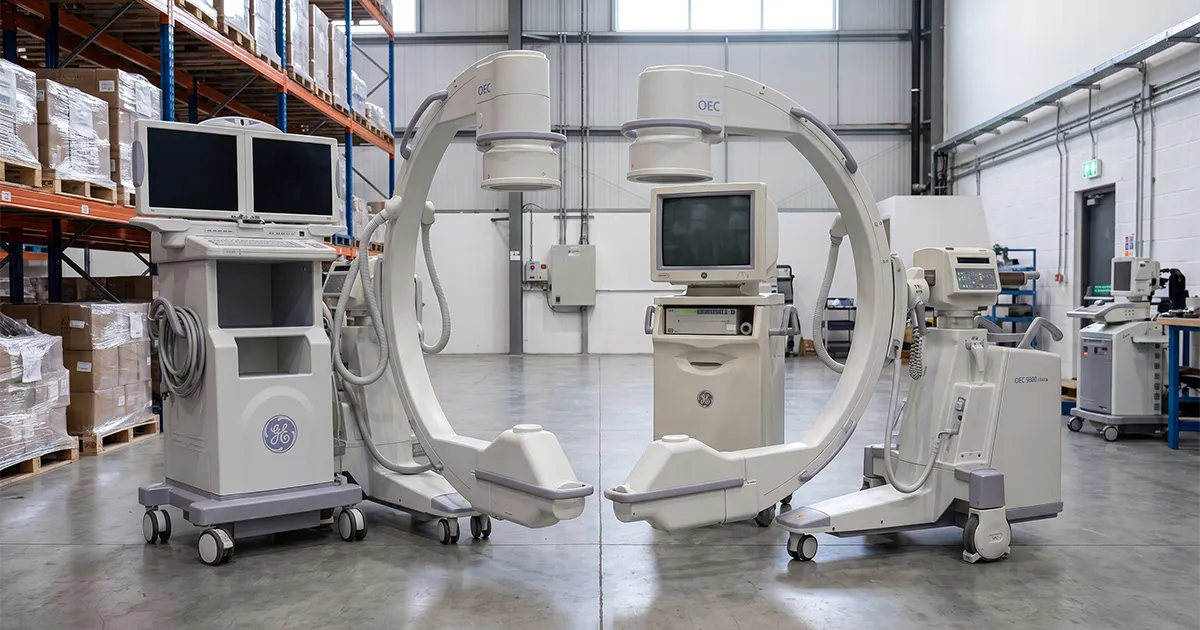
- GE OEC 9900 Elite and 9800 Available
- All-Inclusive: Delivery, Setup & Retrieval
Start With Utilization, Not the Rate
The biggest driver of what you spend is how often the machine is in the room, and most practices estimate that wrong in the same direction.
Count Case Days, Not Calendar Days
A C-arm parked in a storage closet on a Tuesday costs the same as one running six cases, so the number that matters is how many days the machine is genuinely needed. Pull six months of your procedure schedule, mark every day that involved fluoroscopy guidance, and you will usually find the real figure sits well below what the team assumed it was.
Three Usage Patterns, Three Different Budgets
Practices tend to fall into one of three shapes. Episodic users need a machine for a handful of scattered case days a month and budget per rental, block schedulers run their imaging-heavy cases on fixed days and budget weekly, and high-volume facilities keep a unit on site continuously and budget monthly at a negotiated long-term rate. Figure out which one you are before you price anything, because the same annual spend looks completely different depending on the term you rent under. The Ambulatory Surgery Center Association publishes benchmarking data that is worth a look if you want to sanity-check your case volume against comparable facilities.
Where the Estimate Usually Goes Wrong
Growth is the part that gets missed. A pain management practice adding a second injection day, or a surgery center opening a second procedure room, shifts from episodic to block scheduling faster than the budget cycle catches up, and then the number you approved in January stops describing what you are actually doing by June. Build against where your case volume is heading over the next twelve months rather than where it sat last quarter.
What Belongs in a C-Arm Rental Budget
A rental line is more than the rental. Four items belong in it, and the last one is the one that gets left out. If you are planning for fluoroscopy equipment more broadly rather than just the rental side, our fluoroscopy equipment cost breakdown covers the purchase comparison in detail.
The Rental Term Itself
This is the daily, weekly, or monthly rate for the machine, and it moves with the model and the length of the commitment. Longer terms carry better effective rates, which is exactly why the utilization work above pays for itself: knowing you need eleven case days a month is what lets you negotiate against a monthly rate instead of quietly paying eleven separate day rates.
Delivery, Setup, and Retrieval
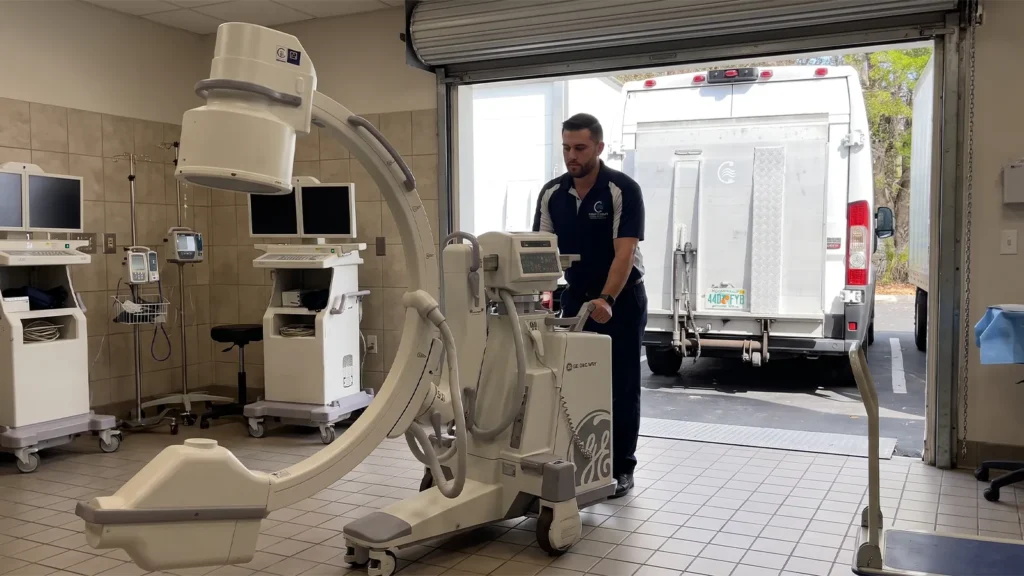
Ask whether this is bundled or billed separately, because it is a real cost either way and providers handle it very differently. Coast to Coast includes delivery, setup, and retrieval with every rental inside our service area, so it never surfaces as a line you did not plan for. If another provider quotes a low daily rate and then charges freight in both directions, the comparison you think you are running is not the one you are actually running.
The Technologist Line
Someone has to operate the machine. If your facility employs a radiologic technologist, that cost already sits in payroll and does not belong in the rental line at all. If you do not employ one, you are contracting per case day, and that figure belongs in the equipment budget right next to the rental so the true cost of an imaging-guided case is visible in one place instead of split across two.
The Contingency Line Nobody Budgets For
Equipment fails. A machine that goes down the night before a full surgical day turns into cancelled cases, rescheduled patients, and revenue that does not come back, which is a far larger number than the rental itself. Carrying a small standing contingency for emergency replacement costs less than absorbing one lost case day, and it is worth confirming your provider can actually deliver that replacement before you decide how large the line needs to be.
Run the Per-Case Math Before You Ask for Approval
Finance committees do not really approve rental agreements. They approve a cost per case, so convert your number before the conversation starts rather than during it. A C-arm rental budget that has already been translated into cost per case makes for a much shorter meeting.
The One Figure That Moves the Conversation
Take the total rental cost for the period, add the technologist cost if it applies to you, and divide by the number of fluoroscopy-guided cases you expect in that same period. That is your imaging cost per case. It is one figure, it is defensible, and it reframes the request from an equipment expense into a per-procedure input that sits next to every other per-case cost the committee already reviews.
Check It Against Reimbursement
Once you have cost per case, hold it up against what those procedures actually reimburse. The CMS Physician Fee Schedule Look-Up Tool gives you current national and locality-adjusted amounts for the codes you bill, and running your imaging cost against those figures is the fastest way to see whether your case volume supports the rental term you are considering.
Watch the Break Point
Cost per case drops as you concentrate cases onto fewer rental days, and the effect is not subtle: four cases spread across four separate day rentals costs four times what those same four cases cost on a single day. Before you increase the rental term, check whether the schedule itself can be tightened first, because scheduling is almost always the cheaper lever to pull.
Rental and Purchase Live in Different Budget Lines
This is the point where the conversation stops being about the machine and starts being about which pocket the money comes out of, and that distinction decides how hard the approval is going to be.
Operating Expense Versus Capital Expense
A rental is an operating expense: predictable, recurring, and approved through the normal spending process. A purchase is capital, which brings a depreciation schedule, a longer approval chain, and cash out the door before the first case ever gets billed. The IRS depreciation guidance covers how the recovery period works if you need that detail for a capital request.
What That Changes About Getting Approved
For a practice in its first year or two, the operating expense path is frequently the only one that clears, because there is no case history yet to justify a capital ask of that size. Renting lets the equipment cost scale alongside the procedure volume that pays for it, and that is the version of the argument that tends to land with a board.
When the Numbers Say to Revisit
If utilization climbs past the point where a long-term rental and a purchase start to converge, the math is worth running again. Our C-arm rental versus purchase breakdown walks through that comparison, and the C-arm cost guide carries the current pricing picture for both paths so you are not rebuilding it from scratch.
Questions to Ask Before You Lock the Number
A quote is only budgetable if you know what is inside it, and five minutes on the phone settles almost all of this.
About the Equipment
Which model is coming, is it calibrated and tested before delivery, and what happens if the unit that shows up is not the one you were quoted. Model affects both image quality and rate, so a quote with no model named against it is not a quote you can plan a year around.
About Logistics and Timing
Confirm what delivery, setup, and retrieval actually include, how much lead time the provider needs, and whether after-hours or weekend delivery changes anything on the invoice. Confirm they cover your location too, because statewide coverage is not universal in this industry and a provider who has to subcontract your delivery is a provider whose timing you do not control.
About What Happens When Something Breaks
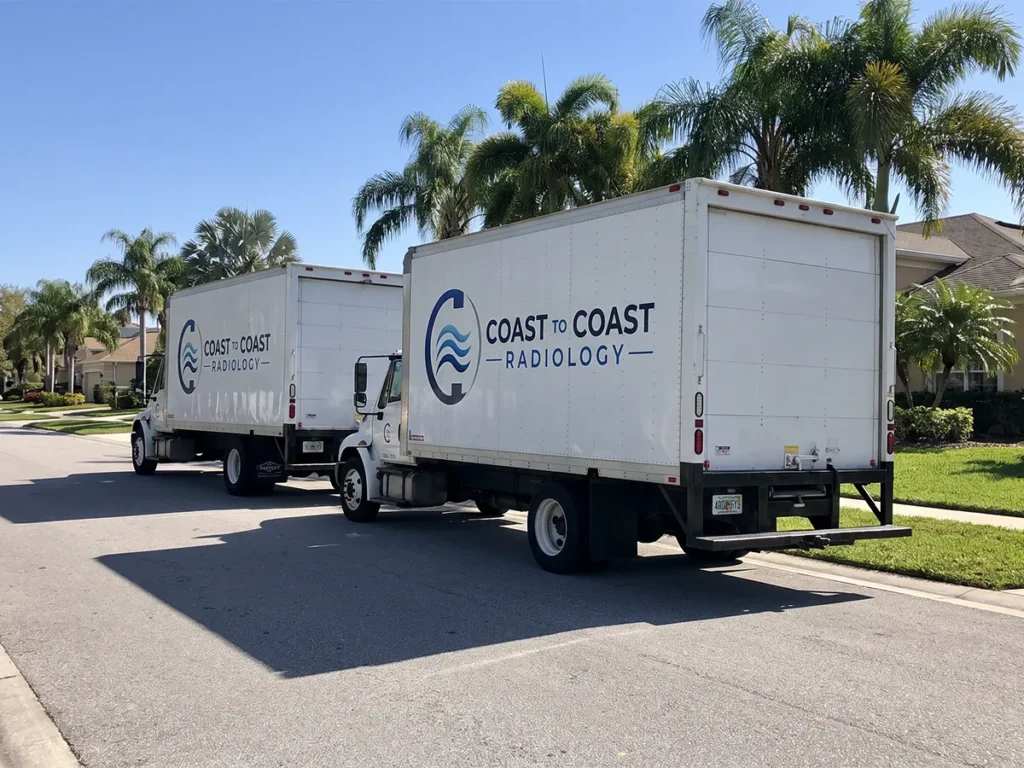
Ask directly how many units they keep available and how fast a replacement can reach you. Coast to Coast runs roughly 20 machines and 11 commercial trucks across Florida, and Travis and Sean answer the phone themselves at any hour of the day, which is what makes a same-day emergency replacement a real answer rather than an aspiration.
Frequently Asked Questions About C-Arm Rental Budgets
How much should we budget for a C-arm rental?
There is no single number, because it moves with the model, the rental term, your location, and whether you need a technologist along with the machine. What we can give you is the method: multiply your expected case days by the rate for the term that matches your usage pattern, add staffing if it applies, and carry a contingency for emergency replacement. Call us with your case volume and we will price it against your actual schedule instead of a rate card.
Is it cheaper to rent by the day, the week, or the month?
Per day of use, longer terms are cheaper. The break point depends entirely on how many case days you actually run, so a weekly rate only beats day rates once your schedule fills enough of that week to justify it. Run your own utilization numbers first, since that is what tells you which term to even ask about.
What is usually not included in a C-arm rental quote?
The two that catch people are transportation and staffing. Some providers bill delivery and pickup as separate line items, and most do not include a technologist by default. Coast to Coast includes delivery, setup, and retrieval with every rental in our service area, and we can arrange a certified technologist through a trusted staffing partner when a facility needs one.
Should a C-arm rental sit in the capital or the operating budget?
Renting is an operating expense, and that is one of the main reasons practices choose it. It stays off the capital budget, avoids a depreciation schedule, and generally moves through a shorter approval process than a purchase request of the same size.
How do we budget for an emergency C-arm replacement?
Treat it as a small standing contingency rather than an unplanned event, and size it against what a single lost surgical day would cost your facility. The other half of that plan is confirming your provider has inventory sitting ready, because a contingency line only helps if someone can actually get a working machine to your door in time.
Do you rent equipment for diagnostic imaging or radiology departments?
No. Coast to Coast rents C-arm and fluoroscopy equipment for operating rooms and procedure rooms. We do not provide diagnostic imaging services, we do not rent MRI or CT equipment, and we do not see patients.
Get a Quote You Can Actually Budget Against
Building a C-arm rental budget gets a lot easier when the number in front of you is a real one. Tell us your case days, the model you need, and your city, and we will price it against your schedule rather than handing you a rate card and letting you do the math. Coast to Coast Radiology covers all of Florida from two operational bases, delivers and sets up the equipment, and picks it back up when the term ends. Call (941) 371-9659 or schedule online.